


The Pest Management Regulatory Agency (PMRA) plays a crucial role in ensuring the safe use of pest control products in Canada under the Pest Control Products Act. Through regularly updated directives and policies, PMRA enhances the registration process for pesticides, safeguarding both human health and the environment.
If you’re navigating the complex world of PMRA pesticide registrations, compliance with Data Code (DACO) tables for the relevant use site categories is essential. This requirement also extends to technical grade active ingredients (TGAIs) and active ingredients used in end-use pesticide product registrations.
Impurity Analysis in TGAIs: What PMRA Expects
When registering pesticides, applicants must conduct a thorough analysis of impurities that might arise during TGAI manufacturing or from raw materials. A key example is the required analysis for nitrosamines, especially if amines and nitrosating agents (e.g., nitrites, nitrates) are present.
PMRA emphasizes the use of best available technology to minimize impurities during production and testing. The analysis must meet the lowest practical Limit of Quantification (LOQ) and adhere to chemical specifications, with upper certified limits set for toxicologically significant impurities.
What Are Impurities of Toxicological Concern?
PMRA defines a range of impurities that must be carefully monitored, including but not limited to:
- Chlorinated diphenyl compounds (e.g., DDT, DDD, DDE)
- Polychlorinated dibenzodioxins/dibenzofurans
- Nitrosamines
- Polynuclear aromatic hydrocarbons
- Metals (e.g., arsenic, lead, mercury)
- Residual solvents (e.g., benzene, toluene, dichloromethane)
When these impurities are detected, applicants must provide detailed validation data, including analytical methods, recovery rates, and LOQ/LOD values.
PMRA-Established Limits for Residual Solvents
To ensure safety, PMRA has set acceptable limits for certain residual solvents in TGAIs, aligned with international standards and Canadian regulations. If the detected solvent levels exceed these limits, additional toxicological data or scientific rationale may be required. In some cases, PMRA may issue deficiency notices requesting further validation data.
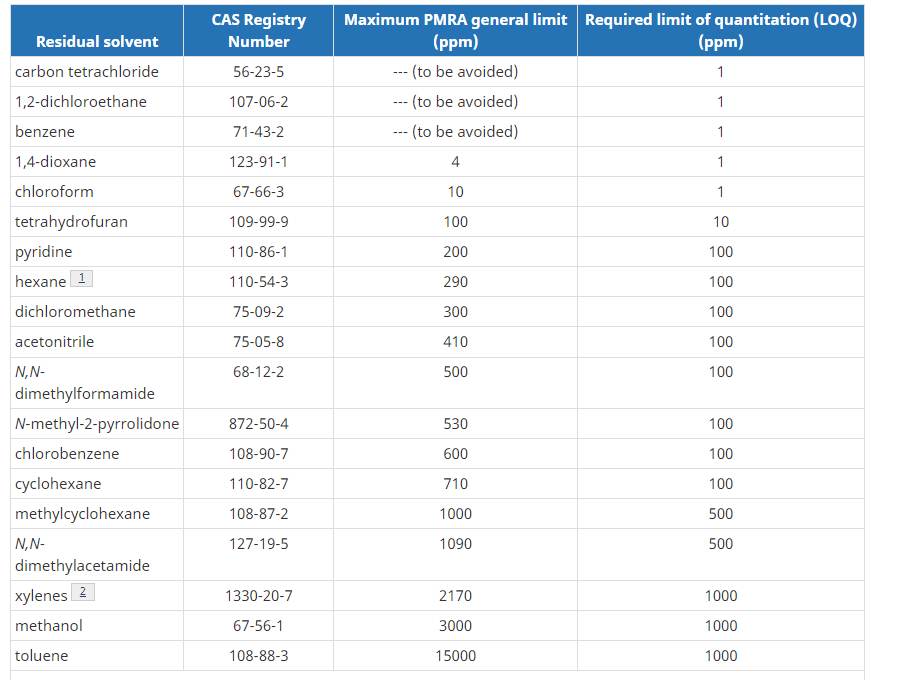
These established limits are applied during the analytical assessment of these solvents when they are expected to be present in a TGAI product. For solvents not listed but that may still pose a concern, PMRA may request additional validation data through deficiency notices during the application process.
How Dell Tech Can Support Your Compliance Journey
At Dell Tech, we specialize in helping businesses navigate PMRA regulations and streamline the pesticide registration process. Our services include:
- Data review and analysis
- DACO table preparation
- Submission via the PMRA online portal
With our expertise, you can confidently meet PMRA standards and achieve successful registration for your pesticide products. Contact us today for tailored guidance on your regulatory compliance needs.
DELL TECH HAS PROVIDED PROFESSIONAL, CONFIDENTIAL CONSULTING SERVICES TO THE SPECIALTY CHEMICAL INDUSTRY IN CANADA, THE USA, EUROPE AND ASIA FOR THE LAST 40 YEARS.


