


By: Sarah D’Mello, SENIOR PRODUCT SAFETY SPECIALIST, email
Significant amendments have been made to the Canadian Hazardous Products Regulation (HPR) to improve safety and clarity in chemical handling and communication. One of the noteworthy additions is the new hazard classification, Chemicals under Pressure.
What are “Chemicals Under Pressure”?
Chemicals under pressure refers to liquids or solids that are packaged in a container (other than an aerosol dispenser) and that are pressurized with a gas at a gauge pressure of 200 kPa or more at 20°C, but excludes any gas under pressure as defined in section 7.5
Criteria
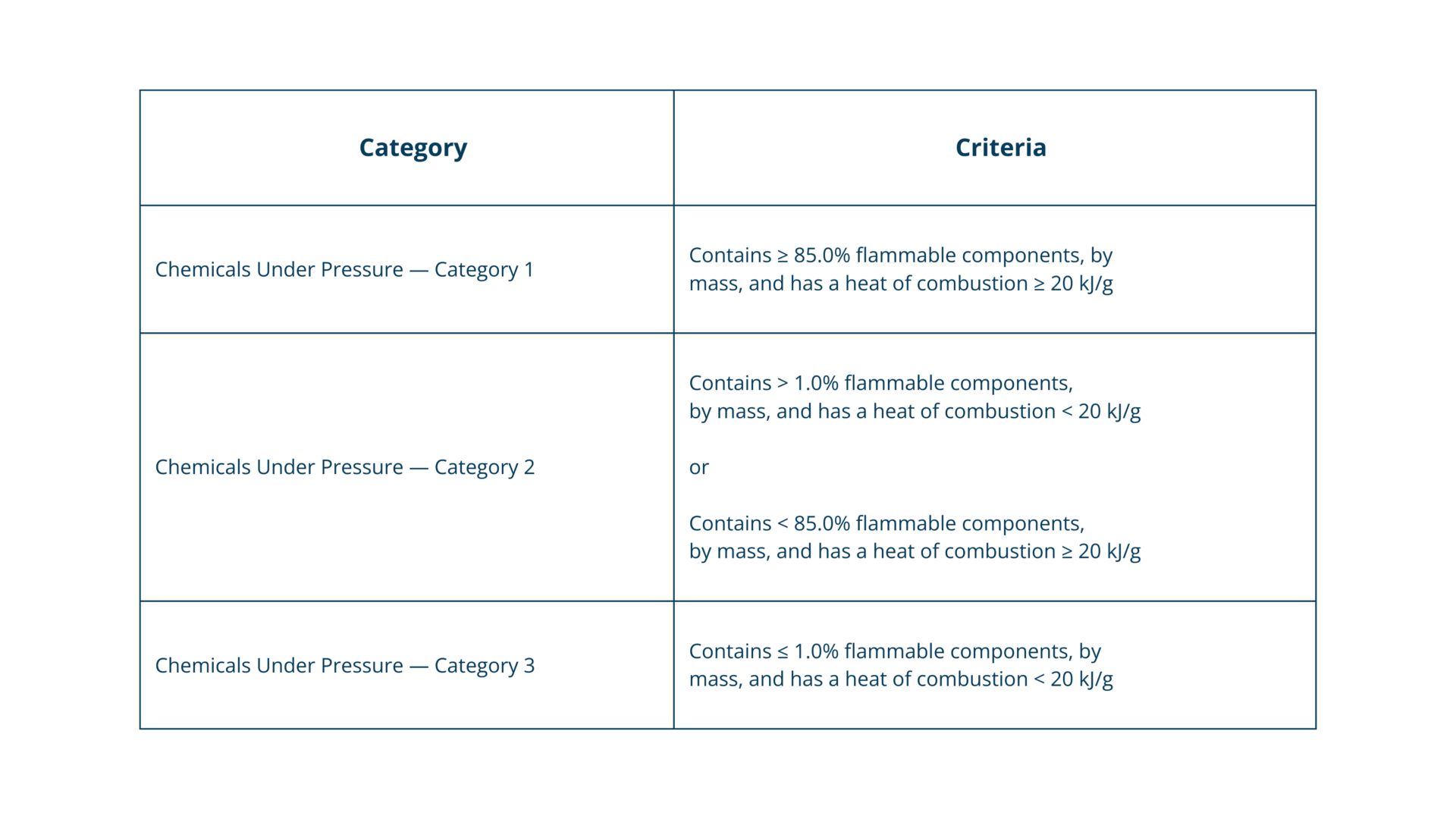
The new hazard classification includes 3 categories with the following criteria:
 Labelling
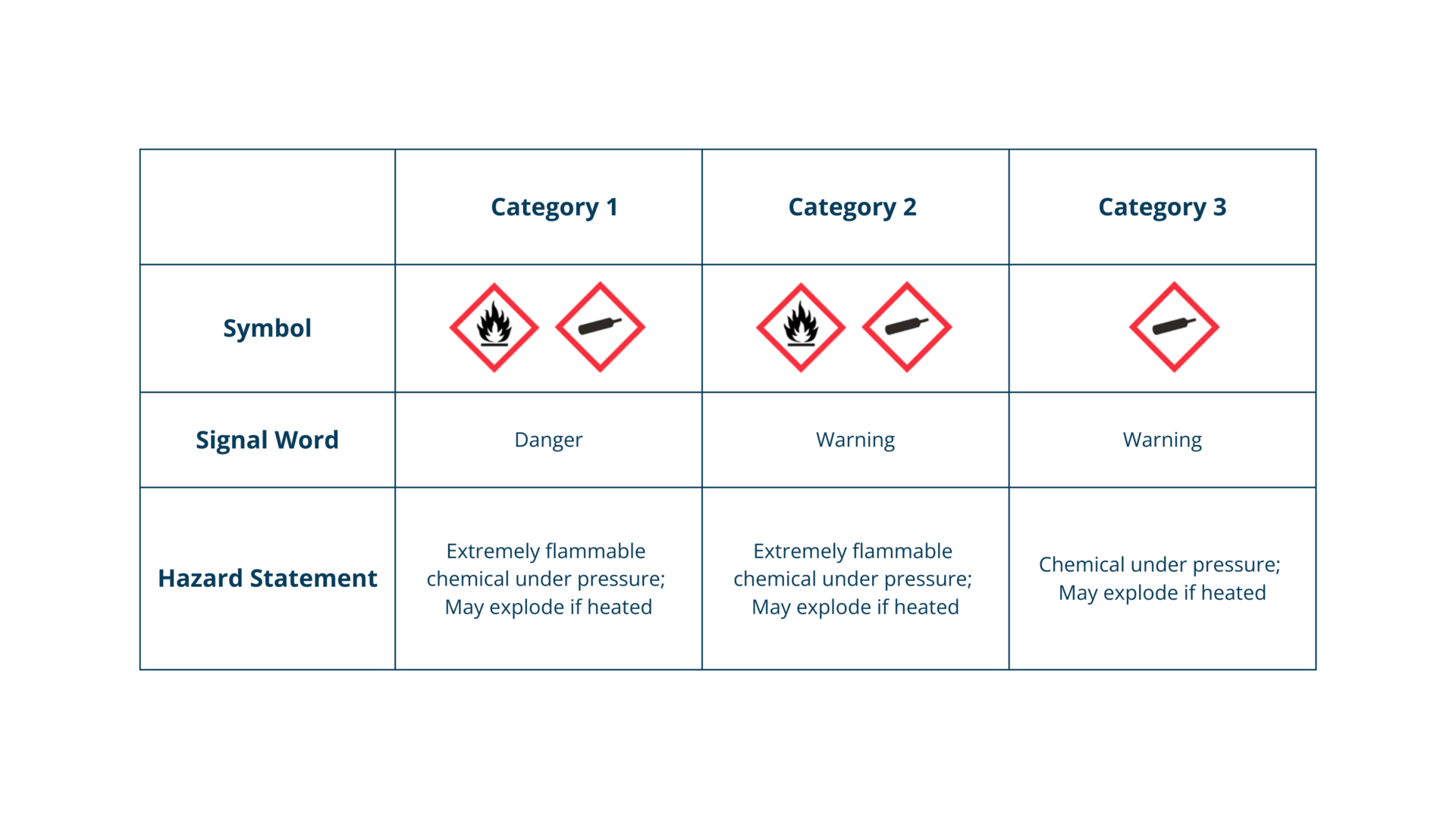
Each category has required symbols, signal word and hazard and precautionary statements:
Exclusions
If a product is classified in a category of the hazard class “Chemicals Under Pressure,” it cannot also be classified as:
- Flammable gases
- Aerosols
- Gases under pressure
- Flammable liquids
- Flammable solids
Manufacturers and suppliers are expected to comply with the amended HPR from December 14, 2025. Subscribe to Dell Tech’s emails and follow us on LinkedIn to stay updated on the latest information about the HPR.
DELL TECH HAS PROVIDED PROFESSIONAL, CONFIDENTIAL CONSULTING SERVICES TO THE SPECIALTY CHEMICAL INDUSTRY IN CANADA, THE USA, EUROPE AND ASIA FOR THE LAST 40 YEARS.


